Skip to content Skip to sidebar Skip to footer

Maui Whale Season: The Best Time to See Humpbacks

Maui whale season is right around the corner, which means humpbacks are on their journey back south. Maui whales come from Alaska. They spend summer up north feeding, then swim more than 3,000 miles to Hawaii’s warm waters. Here, they breed and give birth.

Humpback whales can grow up to sixty feet long, weigh 80,000 pounds, and hold their breath for forty-five minutes. And they sing to one another. Every winter in Maui, you can see them for yourself.

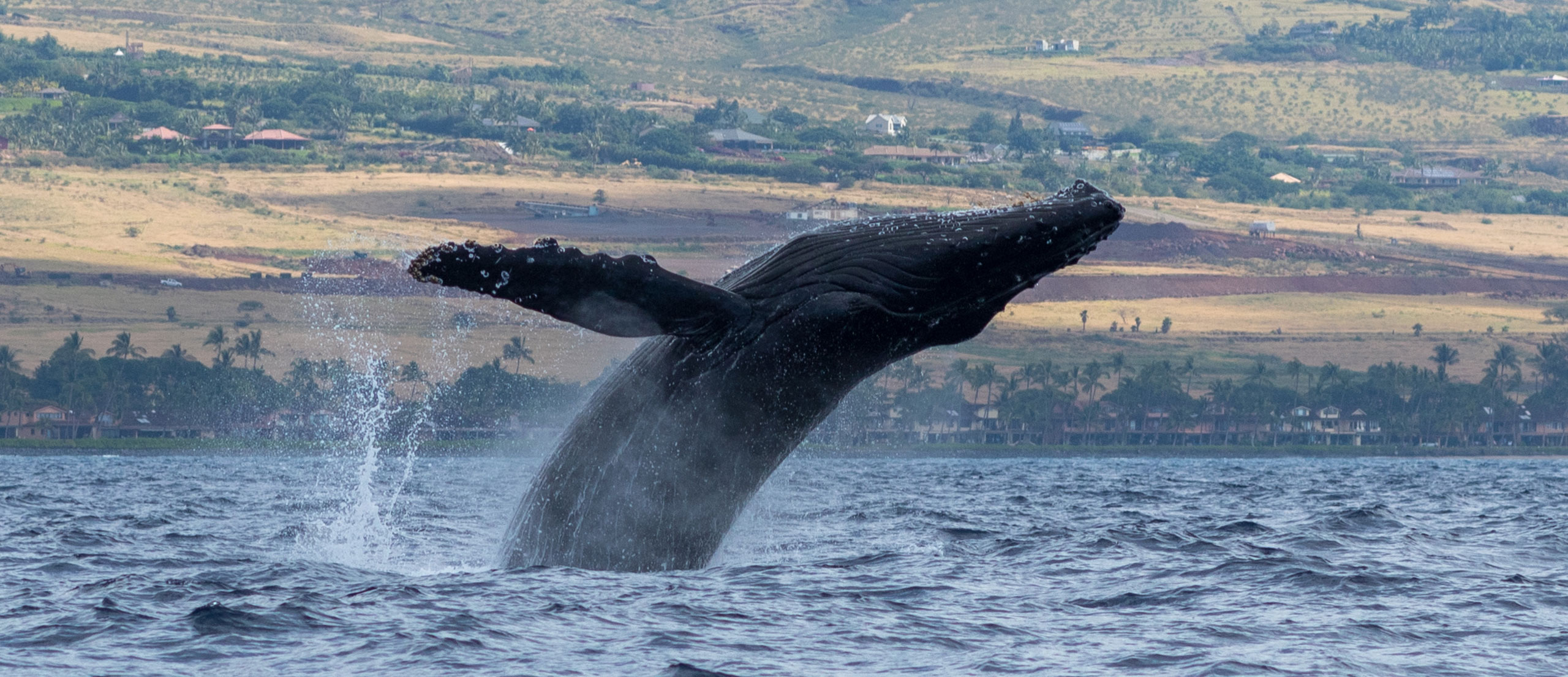
The water off the coast fills with thousands of humpback whales. They breach the water, tail-slap new waves, and raise their calves just offshore. It’s a magical thing to experience.

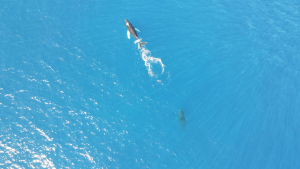
The best way to see the full breadth of this thousand-whale migration is all at once, from the air. A helicopter flight gives a vantage point on whales that few people ever witness. 

When Peak Whale Season Hits Maui

Peak whale season in Maui runs January through March. Typically, February brings the most activity of the year. The first whales usually show up in October or November. From there, numbers build fast and by December, sightings are extremely common.

The winter window is the best season for whale watching. By April, most whales have started the long swim back north toward Alaska. A few stragglers linger into May, but not as many.

The Best Place to See Whales in Maui

But now you’re thinking, where can we see the most whales? As it happens, there’s one answer: the ʻAuʻau Channel. The ʻAuʻau Channel, the water between Maui, Molokai, and Lanai, holds more humpback whales than anywhere else in Hawaii. At peak season, an estimated 12,000 whales pass through it. 12,000!

That arguably makes ʻAuʻau Channel the best place to see whales in Maui. However, there are a few other well-known spots. On land, McGregor Point is along the highway between Maalaea and Lahaina. Many people often call it the best shore-viewing spot on the island. Kaanapali, Kihei, and Wailea all work too, however. And early morning is an especially good time for whale watching.

But, in the end, shore and boat only show you the surface. From a helicopter, you see the whole channel at once, and the shape of a pod moving underwater. Multiply the sight of one whale breaching by a hundred.

You’ll see them in that moment just before. No more fiddling the camera as the splash obscures the view. There’s no missing this sight from the air.

Whale Sights You Can Only Spot from the Sky

From a helicopter, you can see far more of the whales than you ever could from a boat. The full shape of the whale mid-breach. The spread of a pod between waves. Even the moment before the splash as they’re rising to the surface.

Here are some things to look out for, unique to a helicopter whale viewing:

  • Breaching the water.
    • This is the big one everyone hopes for—especially on a boat. The whale launches most or all its body out of the water and crashes back down. The splash is massive, even if scientists still debate why it happens. Some say communication. Others say shaking off parasites. Most kids just think it looks fun.
  • Pec slap and tail slap (lobtailing).
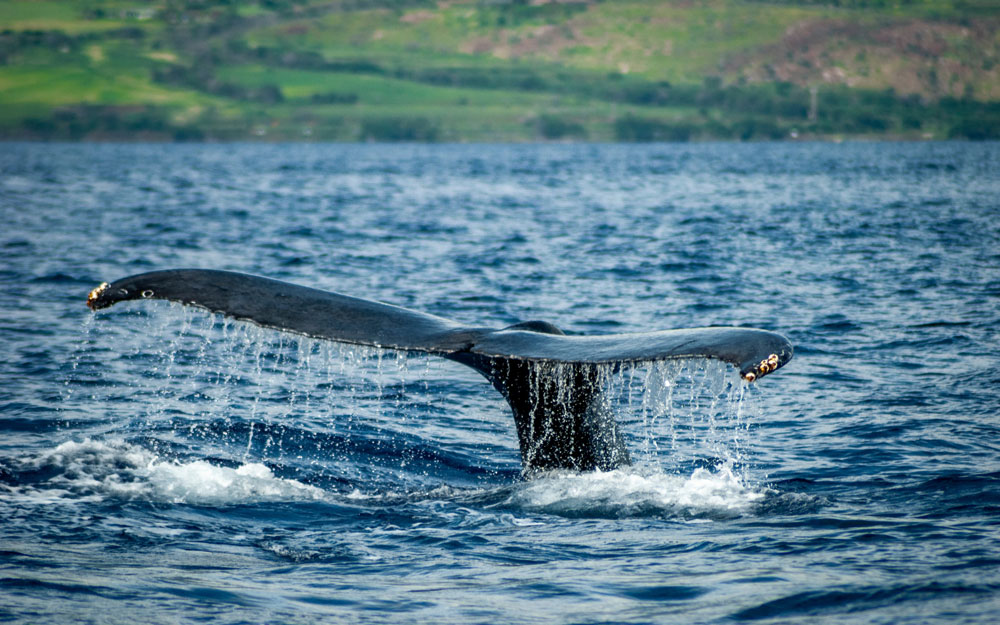
    • This is another very common splash to see. A whale rolls onto its side and slaps a long pectoral fin against the surface, or it raises its tail and brings it down hard. Both carry sound far underwater. That’s why researchers hypothesize that this is another form of whale-to-whale conversation.
  • Pods and mother-calf pairings.
    • Pods are groups of whales, and they’re almost impossible to spot from a boat. However, from the air, you can see a lot of them. The most common grouping you’ll spot is the mother-calf pair.
    • However, Maui is also a breeding area. You may see several males aggressively jockeying to reach one female. They’ll charge, breach, and tail-slap for attention. Researchers have well documented this behavior around Maalaea Bay, the heart of the whale sanctuary.

Humpback whales aren’t big group travelers like orcas or dolphins. So, rather than a ‘school of fish’, you’ll see a big, fun rabble of activity. Since most of it happens just below the surface, the best way to see it all is from the air.

Fun Facts About Humpback Whales

Here are a few of our favorite humpback whale facts to entertain your kids with:
  • Humpback whales grow up to 60 feet long and weigh as much as 80,000 pounds, about six adult elephants. Admittedly, most of the big ones we’ll see will be about 45 feet long.
  • Calves weigh roughly a ton when born! And they gain over 100 pounds a day!
  • Humpback whales can hold their breath for up to 45 minutes, though they usually surface every 10 to 15 minutes. They’re mammals! No gills.
  • Surprisingly, only males sing. But their songs can travel up to twelve miles underwater.
  • Hawaiians call these whales kohola. The name has been part of island language and culture for generations.
A Comeback for Conservation

There is a long history of whale hunting dating back to the late 1800s and early 1900s. By the 1960s, commercial whaling pushed the North Pacific humpback population down to as few as 1,200 animals. At that stage, however, conservation efforts made headway. Hunting stopped, authorities put protections in place, and the population has climbed back above 20,000 since then.

To us, whale season means something remarkable. Every whale you see is proof that a near-extinct species can come back. If people work together and decide to act.

Ready for the Maui Whale Watching Season with Air Maui?

Whale season only lasts a few months a year, and once it ends, you must wait until next winter to see it again. Our West Maui & Molokai Helicopter Tour crosses the same channel these whales call home every winter. That means a sighting is always possible on the flight.

We’re a family-owned company, and whale season is one of our favorite times of the year to fly. Our pilots know exactly where whales tend to surface, and that local knowledge means you’re looking in the right place at the right time. Come join us on the next trip. We can’t wait to help you spot your first whale of the season!

Reserve Your Spot or call (808) 877-7005 to find the right flight for your family.